Around the World With an FNP: The Story of Alum Peter Chordas

Greetings From Morocco. I am currently sitting in an emergency room with a patient in Rabat, Morocco trying to find the definitive diagnosis for abdominal pain. I’m suspicious of E. Coli. Nurses are not wearing gloves. Other patients are in their bays without doors or curtains. A baby is crying in the other bay while they are trying to get an IV in. In the background, I hear the call to prayer. Just a description of this moment…
Finding His Calling
Peter Chordas, FNP, grew up around a community of people from all corners of the world. Both of his parents and grandparents were immigrants, and his grandfather—a physician born in Russia who fled to China before the Russian Revolution—lived right next door. As a child, Chordas watched him tend to patients for free, captivated by his knowledge and gentleness. His mother's stories added another layer: summers spent in a temple with monks and rides in rickshaws. “My grandfather and my mother were both extraordinary human beings,” Chordas says. “I believe I gained a lot of my empathy from them.”
His parents spoke many languages and taught Russian in Monterey, California, where Chordas was born. He grew up surrounded by a community of people displaced by World War II. It was an upbringing that left a mark. “Being raised in such an environment drew me towards an understanding of vulnerable populations of people,” he recalls.
After graduating high school, unsure of what to pursue and feeling self doubt, Chordas suffered a catastrophic house fire. He was admitted to the hospital and spent three nights in the ICU in shock and disbelief. It was there that that idea of becoming a nurse began to formulate in his mind—it was the nurses who saved his life, tending to his wounds and treating him with dignity and kindness. “I began to think perhaps I could become one.”
The Road to the Foreign Service

Chordas took on the challenge. Shortly after graduating with a bachelor’s degree in nursing and marrying his wife Dina, he moved to San Francisco on a travel assignment working as a float nurse in the ICU and teaching nursing part time.
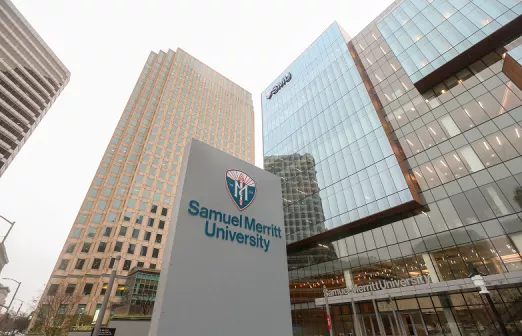
He completed the Family Nurse Practitioner (FNP) program at Samuel Merritt University (SMU) in 1997 and graduated with the thesis portion in 1999, though self-doubt followed him across the finish line. He wondered whether he could ever become the kind of healer his grandfather had been.
Still, he kept moving forward. After completing his master’s degree, he took his first job as a FNP at University of California San Francisco (UCSF)—sharpening his clinical skills and, for the first time, finding his Russian language genuinely useful. The city's diversity broadened his world view. “San Francisco has a lot of diversity,” he says, “and I enjoyed taking care of people from all walks of life.”
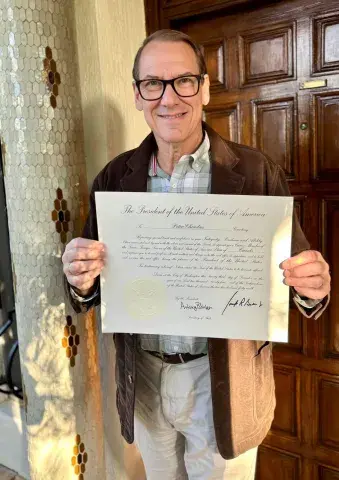
It was around this time that Chordas first heard about the United States Foreign Service, a professional diplomatic corps made up of American citizens living and working abroad for the State Department.
The idea took hold immediately, but there was a requirement: five years of experience as a nurse practitioner. So he and Dina, now with two children, moved to Portland, Oregon in 2002, where Chordas worked simultaneously in an emergency room at Oregon Health & Science University and a county clinic serving low-income families. The years in Portland turned out to be exactly the foundation he needed to build confidence and develop clinical and leadership skills as a NP.
Life as a Foreign Service Nurse Practitioner
For the past two decades, Chordas has built a career that is equal parts medicine and diplomacy—living abroad, caring for embassy communities, and forging relationships with local providers and officials across nine countries. But the job still keeps him on his toes.
In November of 2025, Chordas received an after-hours call from a patient in Morocco. He had seen her that morning for nausea and vomiting—a common complaint overseas—treated her for a bacterial infection, and sent her home to rest. When she called back with chest pain, he didn't hesitate. He was at her door within four minutes.
At the local emergency room, the physician fixated on a rash the patient had developed on the way over. Chordas firmly redirected him; she had chest pain, and that needed to come first. It took some persuading to get a heart reading done. When a nurse struggled to place an IV line, Chordas's nurse stepped in and got it on the first try. Medications arrived in unlabeled syringes sitting alongside identical ones filled with saline, a mix-up that could have been catastrophic.
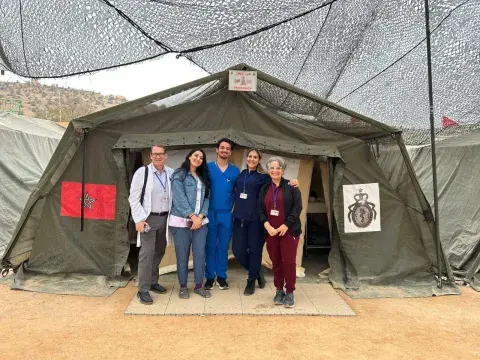
Slowly, the patient stabilized. Her pain subsided, the rash faded, and a heart attack was ruled out. But Chordas wasn't satisfied. Back at his clinic the next day, additional tests revealed the culprit: a large gallstone. He arranged for her to be flown to the United States for surgery, and she soon returned to post healthy.
“You can see how we needed to advocate for our patient and make sure she got the care she needed,” he says, reflecting on the experience. In the Foreign Service, that advocacy and willingness to speak up in a foreign ER is as essential as any medical skill he carries.
More than a clinician, Chordas is a diplomat, educator, emergency responder, and community advocate. He’s served in nine countries and over 17 posts across Africa, Europe, Russia, Eurasia, and the Middle East. Now, he currently resides in Rabat, Morocco, where he has been for almost two years.
Chordas’ responsibilities stretch well beyond routine care. He supervises his Health Unit staff, advises the Ambassador on public health matters, teaches first aid and health promotion courses to the broader embassy community, and steps into a diplomatic role during high-level government visits. His days are a mix of the ordinary and the high-stakes, with one or two complex cases usually in the mix. In austere posts where local resources are limited, patients often look to him as an expert in every field of medicine. It is a pressure he takes seriously, staying constantly up to date on the latest research to practice the most current medicine he can. “The jack of all trades, expert of none, gets to play doctor,” he jokes.
Building Bridges
When Chordas first arrives at a new post, he prioritizes a relationship with local staff and healthcare providers. Most local physicians and facilities are accommodating, and Chordas has learned to work within their systems diplomatically. Though many work from older training, they are genuinely eager to learn when Chordas brings current research to the table. Building those relationships isn't just good practice—it's a necessity. His health unit can't operate in isolation, so he carefully cultivates a network of trusted local providers.
After 20 years of living abroad, Chordas has noticed how cultural dynamics shape the way care is delivered. “Even gruff bedside manners can be cultural,” he notes. Pain management is a particular gap he encounters repeatedly in many countries. “How many times have I heard the expression, ‘no one ever died from pain?’” he recalls.
In many places, nurses are not accustomed to questioning a physician's orders, and when Chordas encouraged his local staff to speak up, they were shy at first, even surprised to be asked. But every morning, his team huddles to talk through their patients, and slowly that changes. They begin to trust their own instincts, and the unit grows stronger for it.
The same philosophy carries into his relationships with patients. “I am a master of storytelling and metaphors,” a skill he uses to help people visualize and truly understand what is happening inside their own bodies, in a way that a prescription or a diagnosis alone never could.
Medicine Rooted in Humanity
Chordas’ work allows him to reach people and build human connections far beyond the clinic. He recalls a moment when his local embassy guard, Kimba, in Niamey, Niger invited him and his family to their home for tea. As they sat cross legged in their single room, Kimba’s pregnant wife made tea and offered them a meal—goat with beans, scooped up with flat bread on a shared plate. “These are the poorest people with the biggest hearts,” Chordas says.
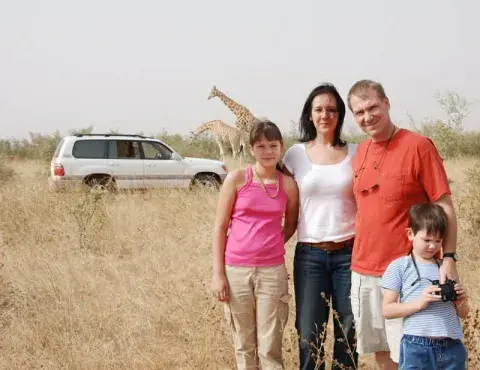
While acknowledging that the Foreign Service is not for everyone, Chordas encourages current nursing students to consider it as a career choice. He would recommend it for someone who is open-minded and interested in learning firsthand about the diversity of the world.
At the center of it all is a belief he holds close: humans are kind hearted. Two decades of living abroad, witnessing the resilience of human beings across vastly different cultures, has humbled him in ways he didn't expect. “I learn from foreign caregivers and patients, even when it differs or is considered outdated,” he says.
It is a philosophy rooted in something deeper than medicine—a holistic approach to care that leaves room for cultural difference without judgment. “You try to tap into their beliefs and understandings,” he explains. For Chordas, that kind of genuine curiosity and respect is where real change begins. “We are all human,” he says, “and our humanity is the commonality.”