SMU Welcomes Students to New Oakland Campus

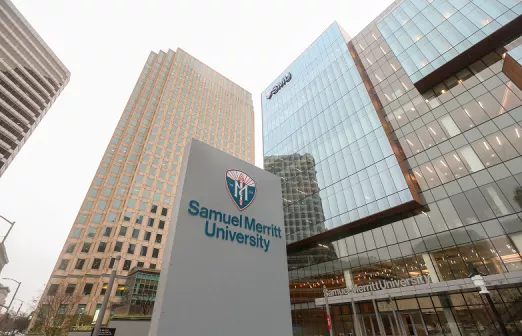
On Monday, January 5, Samuel Merritt University’s (SMU) new Oakland campus opened its doors, welcoming students, faculty, and staff to a bright, modern space designed for connection and cutting-edge healthcare education.
“I walked in and I’m honestly floored,” said Andrew Barone, a first year Doctor of Nurse Anesthesia student. “I think it’s really gorgeous, super modern, so much more space than the old campus,” he commented.
The ten-floor building—equipped with simulation labs, classrooms, a library, study spaces, a café, campus store, and multi-purpose rooms—was bustling with students. Joy Thiesen-Braunstein, student services coordinator, pointed to the outdoor terraces, where students can “look out into the city and get fresh air.”
The excitement was palpable to Karen Shows, executive assistant and project manager for the Oakland campus. “It’s been really thrilling to see their reaction and see the campus through their eyes,” she reflected. “We’ve been working for quite some time to put all this together, and it’s nice to see it finally come to fruition and then be able to see their reactions to it.”
For Sam Alavi-Irvine, founding director of the Center for Community Engagement, seeing the building filled with students marked a turning point. “That was the final piece,” she said. “I’ve seen the campus many times, but to see students in the classrooms, study areas, and just hanging out has been wonderful.”
Executive Vice President and Treasurer Dave Lawlor shared that same sense of fulfillment as students arrived—even those without classes eager to explore. “To see them discovering parts of the building they didn’t expect—from the cafeteria to the simulation lab to library spaces and a brand-new anatomy lab that’s second to none—it’s like, ‘I can’t believe I’m going to school here,’” he said.
In her opening day remarks, President Ching-Hua Wang described the new campus as “more than a new building,” calling it a place where “ideas will be challenged, skills sharpened, and lifelong relationships formed.”
Making Day One Happen
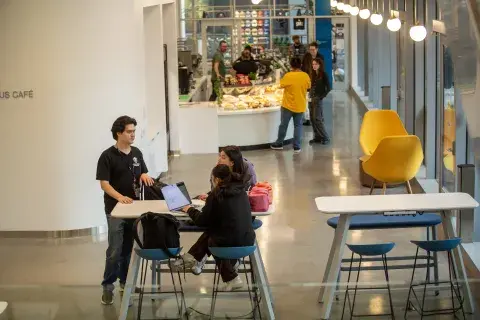
Behind the excitement of opening day was years of planning, construction, and coordination. “It goes back four years,” recalled Lawlor, referencing SMU’s disaffiliation from Sutter Health, followed by a series of municipal approvals and the design and construction of the building.
He credits the many internal teams and external partners who made the project possible, including city officials and planners, architects, contractors, and SMU staff across Academic Affairs, IT, facilities, finance, and other departments. “So many people have had their fingerprints on this,” Lawlor said. “It wouldn’t have happened without them.”
Shows’ role evolved from serving as executive assistant to Lawlor to taking on a central project management role for the Oakland campus. Overseeing logistics and communication efforts, including wayfinding and signage, seating and resource planning, campus tours, move coordination, and preparations for both the first day of operations and the upcoming grand opening, Shows has been instrumental in the opening of the new campus.
“For a long time, this was just visual,” Shows said, recalling early renderings and floor plans. “All of these decisions and details and things that you’ve planned are now being used as you intended.”
Student Centered Design and Enhanced Learning
The new Oakland campus was designed from the ground up with students in mind, prioritizing collaboration, visibility, and high-quality learning environments.
Chris Chu, assistant dean of students for campus life, emphasized the importance of having a building that was designed to be a college campus, in contrast to SMU’s previous Oakland location. “There are a lot of comfy spaces integrated with classrooms, labs, and faculty areas,” he said, hopeful that it will create more opportunities for collaboration by bringing students, faculty, and staff together in one shared space.
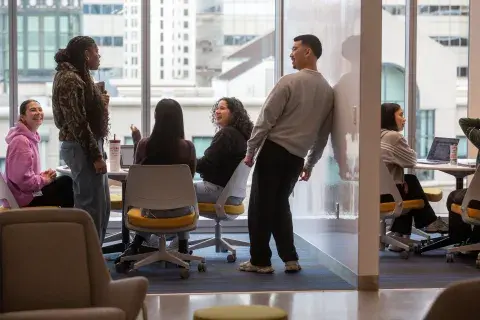
That sense of connection was immediately apparent to Sierra Raha, a first-year Doctor of Physical Therapy student. “There are so many more rooms for us to collaborate with each other,” she said. “Last semester, each program was in their own areas on campus, so I never saw some of the programs. But here, since everyone has to go through the same areas, we’re definitely going to see a lot more people.”
Shows echoed this sentiment, noting how the previous campus was composed of many disparate buildings. “Everybody felt very scattered,” she said. The new campus, with its central entrance and shared pathways, immediately changed the dynamic. Now it feels alive, she noted, with everyone coming through, greeting one another, and gathering in a way we didn’t see before.
Barone added that as a doctoral student, “we need camaraderie,” so having somewhere to connect with his classmates is of utmost importance. Shows looks forward to seeing this camaraderie take place and to “see students take advantage of organizing events and hangouts that will help them feel more cohesive.” She hopes the shared environment will foster a sense of identity beyond individual programs. “‘I’m an SMU student’, versus ‘I’m just a nursing student or DPT student’,” she explained.
Beyond shared spaces, the new Oakland campus represents a major leap forward in instructional facilities. Expanded simulation centers and a state-of-the-art anatomy lab give students more realistic, hands-on training than ever before.
“I am really excited to see all of the ways that the simulation center will be used,” Shows said. The Home Health Center, she points out, designed for practicing in-home care or skilled nursing facility care, provides experiences that students could not accurately simulate at the previous campus.
Lawlor noted that the new anatomy lab “really honors the people that gave themselves to science.” Combining a high-floor location overlooking the Bay Area with some of the most modern technology available, he emphasized the dramatic contrast between the new space and previous facilities, saying that moving from those older environments to a state-of-the-art anatomy lab “is really fun.”
Campus Connected to Oakland
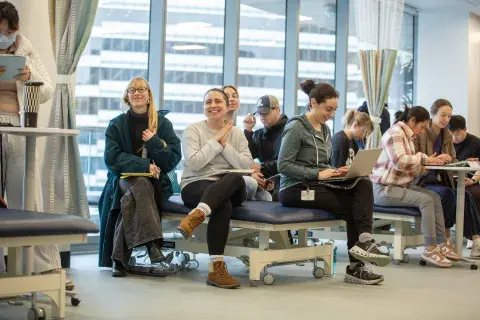
Located in the heart of downtown Oakland, the new campus strengthens SMU’s connection to the broader community.
With community engagement in mind, Sam Alavi-Irvine is most excited about the campus being adjacent to BART and centrally located, making it easier for SMU to embed itself in the community. She anticipates expanded clinical and volunteer opportunities due to the concentration of clinics and organizations nearby.
“It’s just a lot easier for our students to be community engaged when we’re in a bussing place,” she explained. “Our students will really benefit from that in terms of their quality of learning and how much they get to interact with marginalized communities before they go out to practice.”
For Lawlor, the opening of the Oakland campus represents “the last domino of the 1974 downtown city center master plan.” With more than a thousand students, faculty, and staff expected on site each day, the campus will bring new energy to the area by supporting nearby restaurants, businesses, parking partners, and fitness centers. He noted that this daily activity will help revitalize a downtown corridor still recovering from the impacts of the pandemic, positioning the campus as both an educational hub and a meaningful contributor to the Oakland community.
As the new Oakland campus comes to life, university leaders see it as a space built to strengthen connection and community. President Wang stated that being “under one roof” will help bring the SMU community closer together. With spaces that support learning and collaboration, the new campus marks the beginning of a connected and student-centered future for SMU.