
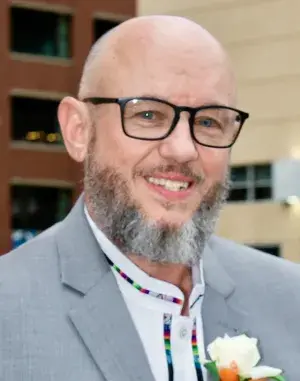
JOSEPH PELLERITO
Program Director Associate Professor PhD, OTR/LAbout Me
Joseph Pellerito is an occupational therapist, scholar, and academic leader whose work centers on rehabilitation, disability studies, and the future of higher education. He holds a PhD in Medical Sociology from Wayne State University, an MS in Technology in Special Education and Rehabilitation from The Johns Hopkins University, and a BS in Occupational Therapy from Western Michigan University. He authored the first textbook on driver rehabilitation and community mobility, co-founded The Open Journal of Occupational Therapy, and has contributed numerous scholarly publications and invited presentations throughout North America on disability studies, wellness, and educational innovation. He co-hosts the podcast College Counterpoints on the future of higher education, and his leadership has secured record philanthropic support and competitive research funding advancing evidence-based practice in the health sciences. His teaching, scholarship, and service reflect a longstanding commitment to people with disabilities, their caregivers, and other historically marginalized communities.
Education
I hold a Doctor of Philosophy (PhD) from Wayne State University in Detroit, Michigan, where my doctoral work in the Department of Medical Sociology examined driving retirement and the quality of life of older men and women living in Metropolitan Detroit.
I earned a Master of Science in Technology, with a concentration in Special Education and Rehabilitation, from The Johns Hopkins University in Baltimore, Maryland.
I completed my Bachelor of Science in Occupational Therapy at Western Michigan University in Kalamazoo, Michigan, graduating with high honors through the Lee Honors College.
Teaching Interests
My teaching interests span the full arc of occupational therapy and health sciences education, from foundational professional coursework through post-professional doctoral study. At the doctoral level, my primary interests are executive leadership and strategic management in health sciences, program administration and entrepreneurship in allied health, and the mentorship of capstone projects through design, implementation, and dissemination. I am particularly committed to teaching research methods across the curriculum, including advanced qualitative and mixed methods, health data analysis, and the full allied health research sequence.
A second area of teaching focus is my clinical specialization in assistive technology, adaptive driving and community mobility, and low vision technology and rehabilitation, which I have taught in hybrid and fully online formats. I am also drawn to courses addressing health disparities, global health perspectives and policy, and the social and ethical dimensions of practice, including legal and ethical issues in healthcare administration and interprofessional collaborative practice.
Across all levels, my pedagogy emphasizes evidence-based instruction informed by cognitive load theory, the thoughtful integration of technology and simulation, and blended learning design that sustains engagement during both remote and immersive on-campus phases. I enjoy teaching foundational courses such as Introduction to Occupational Therapy, functional anatomy and kinesiology, and therapeutic interaction skills, where I can help students build the clinical reasoning and professional identity that anchor later doctoral work. My consistent aim is to prepare practitioners who are technically skilled, ethically grounded, and ready to lead.
Scholarly Interests
My scholarship centers on the intersection of occupational therapy, assistive technology, and community participation, with a sustained emphasis on enabling meaningful occupation across the lifespan. The defining thread of my research has been driver rehabilitation and community mobility, the area in which I edited the foundational textbook Driver Rehabilitation and Community Mobility: Principles and Practice (Elsevier) and directed the Driving Simulation Research Center at Wayne State University. Within this domain I have studied driving retirement and its effects on the quality of life of older adults, the cultural meanings Americans attach to driving, driver distraction and safety, and the relationship among disability, vision, aging, and driving performance. This work has been supported by NIDRR, ADED, and endowment-funded simulation grants.
A second area is social justice, disability advocacy, and the social construction of disability, reflected in my editorial work on Issues in Social Justice and Social Problems: A Critical Thinking Approach, and in long engagement with ADA compliance, veterans services, and equitable access to technology. Closely related is my interest in assistive technology and adapted access as pathways to independence, recreation, and community engagement.
A third strand is the scholarship of teaching and learning in the health professions. My collaborative work has applied cognitive load theory to instruction, developed multidisciplinary blended learning solutions, and produced board preparation and gerontology training resources, all informing my interest in program design, assessment, and clinical workforce readiness.
Across these areas my agenda is applied and translational: research that produces usable tools, strengthens evidence-based practice, and advances participation and well-being for older adults, veterans, and people with disabilities.
Publications
Pellerito, J. (Ed.). (2026, in press). Adapted driving and community mobility. Detroit, MI: Harmony Publishing.
Tridico, F., Pellerito, J., & Armstrong, J. (Eds.). (2018; 1st ed. 2011). Issues in social justice. Sault Sainte Marie, Ontario: Landon Elsemere Publishing House Ltd.
DiZazzo-Miller, R., & Pellerito, J. (Eds.). (2010). Preparing for the occupational therapy board exam: Forty-five days and counting. New York: Jones & Bartlett.
Pellerito, J. (2010). Transitioning from driving to driving retirement. In P. Lichtenberg (Ed.), Handbook of assessment in clinical gerontology (2nd ed.). Philadelphia: Elsevier.
Pellerito, J., DiZazzo-Miller, R., & Pociask, F. D. (2010). Promoting meaningful occupations through assistive technology, driver rehabilitation, and community mobility. In R. DiZazzo-Miller & J. Pellerito (Eds.), Preparing for the occupational therapy national board exam. New York: Jones & Bartlett.
Pellerito, J., & DiZazzo-Miller, R. (2010). Business and management fundamentals. In R. DiZazzo-Miller & J. Pellerito (Eds.), Preparing for the occupational therapy national board exam. New York: Jones & Bartlett.
Pellerito, J. (2009). Driving retirement. Munich, Germany: VDM Publishing House, Ltd.
Pellerito, J. (2009). The effects of driving retirement on older men and women. Topics in Geriatric Rehabilitation, 25(2), 135-154.
Pellerito, J. (2009). Driving discontinuance and quality of life among older drivers. In F. Tridico, J. Pellerito, & J. Armstrong (Eds.), Social problems: A critical thinking approach. Sault Sainte Marie, Ontario: Landon Elsemere Publishing House Ltd.
Pellerito, J., Tridico, F., & Lysack, C. L. (2009). The role of the automobile in American culture. In F. Tridico, J. Pellerito, & J. Armstrong (Eds.), Social problems: A critical thinking approach. Sault Sainte Marie, Ontario: Landon Elsemere Publishing House Ltd.
Professional Affiliations & Memberships
American Occupational Therapy Association (AOTA)
National Search and Rescue Association (NASAR)
Community Service
My service interests center on disability advocacy, veterans support, and expanding access to care and technology for underserved populations. I founded the Veterans Service Provider Network, a quality-controlled network that served more than 1,000 individuals across 28 states, and I founded and led the Motor City chapter of AMBUCS, which works to create mobility and independence for people with disabilities. I have served on the Board of Directors of Catholic Charities, Diocese of Kalamazoo, reflecting a commitment to faith-based community support, and on the St. John Providence Health System Detroit Advisory Council.
I have a longstanding record of civic and educational governance, including nearly two decades on the Board of Directors of the Wayne County Community College District, where I helped guide access and workforce development for a large urban community. I served as an appointed member of the Consumer Advisory Council and Appeals Board for the Detroit Department of Transportation, advancing accessible community mobility at the municipal level.
My professional service complements this community work. I co-founded and served as senior managing editor of The Open Journal of Occupational Therapy, supporting open access to scholarship, and I have served as an invited grant and manuscript reviewer for organizations including the National Institute on Aging, AOTA, AJOT, and ADED. Across these roles, my consistent aim has been to strengthen the connection between higher education, clinical practice, and the communities that depend on accessible, equitable services.
Honors & Awards
Shining Star Award, University of Toledo (2014-2015)
Distinguished Alumnus of the Year, Western Michigan University (2012-2013)
Teaching Excellence Award, Eugene Applebaum College of Pharmacy and Health Sciences, Wayne State University (2006, 2007, 2008, 2009)
Service Commendation, Older Driver Initiative Expert Panel, American Occupational Therapy Association (2003-2007)
The Ellen Garms Innovative Teacher of the Year Award, Wayne State University (2003-2004)
Peer Recognition Award, Michigan Occupational Therapy Association (MIOTA)
President’s Award for Excellence in Educational Program Development, Rehabilitation Institute of Michigan (DMC)
Inaugural Employee of the Year Award, Rehabilitation Institute of Michigan (DMC)